Showing posts with label Henry. Show all posts

Thursday, March 15, 2012

Amnesia: The Dark Descent - 0/1


Amnesia: The Dark Descent – 0/1 – Henry Arrambide

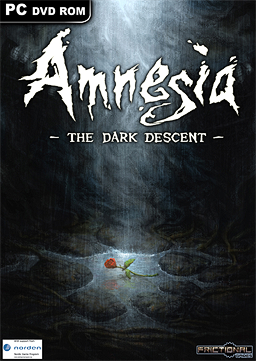
This cover is deceptively intriguing. 

Amnesia: The Dark Descent is, in the most literal sense, a fool’s game. In order for the player to be drawn into the haunting atmosphere of the game’s abandoned castle, a great deal of intelligence must be sacrificed. While most horror games do this effectively by creating a sense of tension and self-doubt within the player that undermines the player’s trust in their own intelligence, Amnesia robs the player of an element of choice which allows that kind of tension to form organically. 

Sunday, January 9, 2011

Pac-Man: Championship Edition DX

Pac-Man Championship Edition DX – 1/1 – Henry Arrambide


Common Occurrence. 

    Being born of the NES/SNES generation and starting there, developing a fuller palate during the N64/PSX generation, and then coming to gaming maturity (hahahahahahah good one) during the Xbox/PS2/GCN (never understood the GCN abbreviation)  generation, there are certain biases and stereotypes I’d probably be expected to carry – “New games are shit, OoT is the best game ever, jRPG’s are the best genre, Western Devs suck, all you kids play is Halo and CoD, grimdark sucks, Gears of War doesn’t have enough color, old games (pre-snes) are too ugly and don’t have storylines, there’s no point in playing Donkey Kong, Zelda created everything.” I think that’s enough.

    Well…all the kids are playing is Call of Duty. But you know what? Gears of War is great. Donkey Kong is great. Pre-snes games are fantastic because they aren’t trying to tell a story or be a movie, they’re trying to be games. Which brings me to Pac-Man.

Friday, December 31, 2010

Vanquish - 1/1 (Last post of the year here I come!)

Vanquish - 1/1 - Henry Arrambide


Gears of War meets Bayonetta? I'm in.

    I love Mega Man. There’s like fiftysomething Mega Man games, right? Well, the mechanics of Mega Man are so arcadey and simple yet so open to different play styles that it just makes the game so replayable. Removed from just one game and placed into say the X series or the Zero series or some other franchise, it still works because it’s still the same great mechanics, just with new level layouts and challenges demanding your knowledge of the mechanics. DooM works in the very same manner; Final DooM and DooM 2 are very much the same mechanics in new levels. Gears of War operates on a similar level, which is why Horde is so engrossing. Tetris may be the leanest example of this idea: screw pretty paintjobs and “new” areas, levels, or some bullshit story to string you along. You’re here to stack blocks and so let’s get right to it.

Tuesday, August 17, 2010

Majora's Mask

The Legend of Zelda: Majora’s Mask – 1/1 – Henry Arrambide

    Majora’s Mask is quite possibly the best game ever because it, above all other games, utilizes the medium of interactive entertainment to the fullest (1) to convey a complex idea (2) that can be interpreted multiple ways (3).

Sunday, July 11, 2010

Link's Awakening

The Legend of Zelda: Link's Awakening - 1/1 - Henry Arrambide


       What I miss the most with this new generation of hand-held gaming tech is the originality. Before the GBA hit the market with its flagship Super Mario Advance titles which were direct ports of the SNES counterparts, or the release of the DS with its total conversion of titles such as Resident Evil and Super Mario 64, developers had to get really creative due to technological limitations. Rather than Super Mario World getting a straight port, we received the Super Mario Land games - Six Golden Coins in particular took Mario straight out of any familiar element any ‘hardcore’ Nintendo fan today would recognize and placed him in a land where what Mario still did was jump; boy did those jumps get complex and fun as hell...they are lost now, drowned out by the familiar cult of Bowser and the Koopa troop - please don’t bring up New Super Mario Bros DS whose sole focus was the cutesy Mario atmosphere rather than the meat which makes the game run.

       Link’s Awakening is possibly the best 2D Zelda game and second best Zelda game (best is Majora’s Mask you see; I’ll cover it one day when you’re older). Due to handheld limitations of the time, everything clicks, everything must absolutely work. There is no dungeon consisting of point-a-to-point-b-just-keep-on-clawshotting ‘puzzles’ and there are no items as isolated to a single dungeon as the top-thingamajig from Twilight Princess. Everything in the game needed to fulfill multiple roles and be used throughout the game to optimize space on the cart - what you get is a game in which every item has a purpose on almost every screen, every screen is filled with interesting little details and secrets, and every piece of information must work towards the overall flow of the game; there is no excess, there is no fat. 

Monday, May 31, 2010

DooM II and friends.

DooM II - 1/1 - Henry Arrambide

NOW IN GLORIOUS EXTRA COLOR!

    Do you think that your fathers are watching? That they weigh you in their ledgerbook? Against what? There is no book and your fathers are dead in the ground. (McCarthy) All that remains are twelve shells, six shots from the double barrel. You face down a flickering hall which can only lead deeper into hell; roars of cacodaemons echo down from the void, each reverberation bearing a unique taunt. Slap those shells in the barrel and walk forth, the end is inevitable.

    Have you ever played DooM? I mean really played it; episode 1 is freeware and most people just download that for a good romp on the easiest difficulty, shooting and running around splattering shrapnel and enjoying the cartoon gore splash about. Or they pirate key wads and then download skulltag or zdoom and some (admittedly awesome) mods like true 3D total conversions and custom campaigns and enjoy an entirely different beast than what they originally downloaded. I'm not asking if you've done that - everyone downloads DooM out of novelty for temporary enjoyment or "hardcore" gamer credit in some form. I'm asking if you've played DooM.

Saturday, May 22, 2010

Breath of Death VII: The Beginning

Breath of Death VII: The Beginning – 1/1 – Henry Arrambide


            Breath of Death VII: The Beginning (BoD) is a little gem I found on the Xbox Live Arcade’s “Indie games” section among such wonderful titles such as ‘Avatar Boogie’, ‘Curling 2010’, ‘Who did I date last night?’ and a multitude of zombie titles (seriously guys the novelty has worn off) (in case you can’t tell those titles in that sequence are NOT wonderful). BoD is what the indie section was made for; I would say you get more than your dollars worth out of it (OH YEAH IT’S ONLY ONE DOLLAR. BUY IT), but saying that you get your dollars worth attaches a certain deflated value to that dollar. You don’t want BoD to be some exception to the rule; you want BoD to be the standard by which the games in the indie section are measured. Seriously, why are there so many zombie games and who is buying this crap?

Sunday, May 9, 2010

Final Fantasy 6 (the jRPG Gauntlet continues!)


Final Fantasy 6 - 1/1 - Henry Arrambide

I'm going to say this once - best Final Fantasy, no nostalgia. Let's try to clear this up with something besides the usual points fanpeoples make in defense of the game.

The problem with most Square games, which was born all the way back in oh, FF4 but not really problematic until FF6 and then found economically viable with FF7, is that above all they strive to be cinematic experiences more than actual games. This isn’t a Hurrdurr interactive movie slur; if the games actually pulled off their cinematic dreams well then sure, it’d still be an interactive movie, but damn it would at least be a good interactive movie. This is a root problem because the cinematic look is strived for above everything else, and overrules every other idea within the game. RPG’s were born as a series of placeholders waiting for technology to catch up; nowadays the reason I’m still picking “attack” off of a battle menu in FF13 is because the battle system is still a placeholder which serves the cinematic look of the game. Things must look cool. A problem arises because there is no central theme or idea which the game serves, rather an idea or theme is shoddily tacked onto the game after all the concept art is drawn up, all the cool angles are figured, and the fighting system is hammered out. FF8, as stated in the previous review, is a perfect example of everything done wrong. FF10 is a close runner up though.

Final Fantasy 6 bleeds its cinematic aspirations every turn of the world map and every unfolding of plot progression. It wants so badly to rip the controller from your hands and play the game for you so that it can get you to the next overdramatic scene with hammy dialogue and go “LOOK! LOOK AT THIS BEAUTIFUL PIXEL ART! LOOK AT THIS DETAIL! LISTEN TO HOW THE MUSIC STIRS THE MOST BASE REACTION IN TANDEM WITH THE WAY THE SPRITES ARE DIRECTED!” Yes, the game is overwrought with drama; the limited space of a Super NES cart means characters have to be direct, no meandering allowed. At this point RPG’s were still niche and expensive; I feel that there was a somewhat honest attempt to make a story here. Unlike PS1 era games with their limitless space and multiple discs and pre-rendered scenes requiring you do nothing but sit and watch, the game needed to be lean and direct with the player. Maybe that’s why actual themes and motifs are present. Hamfisted and clumsy, but present nonetheless. Final Fantasy 6 works because it doesn’t work the way Square wanted it to work.


Monday, May 3, 2010

Final Fantasy 8 (or VIII if you're that concerned about it)

Final Fantasy 8 – 0/1 – Henry Arrambide
...and the word 'emo' is not used once. Because that term has been overused by morons.

              Final Fantasy 8 is the anti-videogame. It is a game about making the rules up as you go along, a game that doesn’t try to approach the player at all. It lives in a realm where consistency is a bad thing, where the “story” is an empty shell of a bullet point on the back of the case that was slapped together for no reason aside from it being “what jrpg’s do”.
              It starts with the junction system, needless and bloated, potentially interesting, ultimately gamebreaking. You see, rather than giving you a set of characters with skills, strengths, and weakness, what the game does is give you blank slates. These characters are not “start off unique and eventually turn powerful” characters that previous installments have delivered. With the junction system, literally every character is blank. Stats are modified mainly through attaching different elemental powers to different attributes. Throughout the game, you encounter various beasts and draw points which allow you to collect different types of magic which you then bind to different characters for different statistical outcomes.
              This is not bad. The system itself can be fun. Upon first realizing the intricacies of the system and messing around with it, it seems pretty damn fun, and once you start effectively using Junctions, you feel wonderful. It gives the player incentive to invest in the game world and learn the mechanics. The biggest flaw however, is that the game itself decides that rather than steadily opening up new possibilities for the player by moderating when you get what magic, it’s going to dump the whole mess on you at once. Early on you are handed Diablos, an optional boss who can be defeated with one of those simple jrpg strategy staple patterns. What Diablos does when defeated is give you a card, which then can be harvested into hundreds of “Demi” magic spells, which then can turn your character into a killing machine. All this is roughly an hour into the game. No longer is there challenge. No longer is there incentive to collect magic and use the junction system.

Friday, April 23, 2010

God Hand

God Hand – 1/1 – Henry Arrambide


Closest thing you get to a screen all review.    

    The term ‘gamer’  gets thrown around quite liberally these days; plenty of people log 5+ hours a night into Bad Company 2 or whatever FPS is flavor of the month and WoW subscribers devote years of their life in much the same vein – these people are not what I would call ‘gamers’. I don’t mean that in a condescending tone, I do not wish to start a hardcore v. casual type of argument here – dealing in those terms is stupid. What I mean to say is that people who enjoy fragging bitches online are just well, average people. They aren’t striving to discover the secrets of game design or considering critical media theory whilst enjoying a round of Modern Warfare 2…they’re just doing what they like to do – socialize with friends and kill some time entertaining themselves. Very much like the people who went and saw Avatar: they enjoyed the experience and saw it multiple times, but they aren’t suddenly a film scholar who is going off to write essays about a movie they enjoyed. They may see it multiple times with friends to share the experience, but eventually Alice in Wonderland or Clash of the Titans comes along and, being flashy and entertaining, they go see that.
    
    Videogames have made a presence very similar to that of blockbuster movies – to try and label someone as a ‘gamer’ is to assume they play more than the norm and have a deep seated grasp of why they game beyond merely being entertaining. Yes, ‘gamers’ exist, but the majority of people just want to do what feels good. It’s what we do as human beings – we find out what it is we like and pursue it. Some people have a better grasp on what it is they like or why it is they like what they like (self help books call this ‘discovering yourself’), but at the end of the day if you like arm wrestling gorillas in luchador getups while being fondled under the table by a midget, well you’re going to be arm wrestling gorillas in luchador getups while being fondled under the table by a midget no matter how much arm wrestling theory and philosophy you have buried in the back of your head. By gaining knowledge in the theoretical and critical aspects of Gorilla Arm Wrestling however, you do get to refine your technique and enjoy the finer aspects of the sport – and you get to reason out why it is you enjoy what you do. Your hobby becomes a tool for self discovery.

    God Hand is THE game which measures out what kind of person you are.

Friday, March 5, 2010

Bayonetta


Bayonetta – 1/1 – Henry Arrambide
Exploitative? Possibly.

There’s a noticeable phenomenon that occurs within any pop-culture medium that I have dubbed ‘The Tendency Towards Mediocrity’. To keep it short as possible, the Tendency Towards Mediocrity is a trend that develops as a medium ages; the medium picks up accessibility, the means of production for the medium are streamlined, and economic viability rises – this leads to a profit driven model of creation which results in games that, while not necessarily bad, tend to follow a checklist of profit-ensuring elements which could be fun, or recycled and stale, but definitely are not inspired by creative drive.
Note that I mention the means of production are streamlined and the medium picks up accessibility. These are key because while it leads to a market dominated by ‘mediocre’ titles, these big safe profit ensuring hits allow companies to make money and allow them to allow developers to take risks and make more experimental products – with cheaper and easier means of production, niches are allowed to grow and stabilize, and so a weird balance is achieved. In other words, shut the fuck up about how casual games are killing gaming.
Where did that come from? Anyways…these ‘mediocre’ titles…like I said, they’re a balancing act. Some of these ‘casual’ or ‘mediocre’ titles are actually good. Majora’s Mask and Silent Hill 2 come to mind as being products of this system, which also churned out Twilight Princess and Silent Hill Homecoming. Which brings me to Batman: Arkham Asylum.

Friday, February 5, 2010

Resident Evil: Code Veronica X - one out of one

The right to be God...

Resident Evil: Code Veronica X - 1/1 - Henry Arrambide

I've always loved Capcom. I can't think of anything they've ever done which is extremely terrible; even those spin-offs and odd little experiments seem to be, if not excellent payoffs (Devil May Cry), at least fun demonstrations which aren't bad at all and never feel like a waste of time (Resident Evil Gun Survivor). Something about what Capcom does just clicks; unlike say, Square-Enix who is a little too aware that video-games are a cultural artifact and try to cash in on their fruits with twenty FF7 spinoffs, FF remakes, and talking about their own accomplishments like they were holistic video-game canon (I get it I get it! Final Fantasy has been around for 20+ years), Capcom sort of just goes with the flow - Mega Man instantly comes to mind as a corporate and cult mascot, yet we aren't constantly bombarded with reminders that the blue bomber is a gaming tradition that must be respected. Hell, thankfully he isn't a sacred cow - or else spin-offs like the Zero and Legends games wouldn't happen. Also, instead of trying to make games that imitate popular art, Capcom just borrows and sometimes damn near plagiarizes concepts - Dead Rising, Resident Evil, and Mega Man once again come to mind. Let's take Astro-boy and Blade Runner and mix in midi's inspired by 80's Rock - boom, Mega Man X is made.

Gotta admit it takes more than copy and pasting to make the idea appealing.

By doing this a few things get accomplished: (1) The game is rooted in familiar pop-culture themes and concepts, it's easier to delve into and spread among the masses Easier to understand. You don't come off like a crazy neckbeard who smells of cheetos and mountain dew - the game is *gasp* somewhat attractive and holds mass appeal. (2) The game is self aware of what it is doing, rather than trying to march around as high art it realizes it's a videogame. Devil May Cry and Resident Evil 4 work really well because they embrace over-the-top situations that can only be pulled off in video-games; any other medium wouldn't be able to maintain the suspension of disbelief. (3) Being self-aware and embracing the fact that you're a video-game, not an interactive movie or an interactive novel, along with some semblance of artistic style and themes allows games to be made that, while not extreme deep, mind-altering endeavors, are extremely well put together and fun. They work. Mega Man 5 may be the worst in my opinion of the classic series, but it still works - and for an NES game, it still has what was for it's time an excellent little story boiling with all kinds of plot twists and cut-scenes which for an NES game were quite impressive. Mega Man 5 is also an example of the "Ain't Broke Don't Fix It" mentality the company runs with. So yeah...Code Veronica.

Friday, December 11, 2009

Silent Hill 2 - one out of one - Henry Arrambide

Silent Hill 2 – 1/1 – Henry Arrambide

The fact that a SH3 review preceded this is merely coincidence.

              When you set out to make something ‘mature’, you must be careful. Trying to prove that games are ‘mature’ may lead to something like Manhunt, where ‘maturity’ is just a coverall term for violence, cartoonish gore, or sexual deviancy. I find that striving to make something ‘mature’ in those oh so useful selling points comes off as insulting; it’s as if the creator is saying that the gaming populace is immature, unable to appreciate games properly, and so tits and violence must be added (not that cartoonish excess is a bad thing when handled correctly). You get so caught up in trying to make something ‘mature’ that you forget the other goals entirely.
              Silent Hill 2 understands this. The game is tasteful with its violence; blood and gore don’t spew forth with every gunshot and whack, but are effectively used when needed. It tells a simple yet twisted story, and expects you to pick up the pieces and determine the truth. There is no barrage of cutscenes and extended hours of dialogue. What exists are quick snippets, short lines dropped by characters as lost in the world as you are. No one knows what the hell is going on, not even the game in some cases. Why should there be an NPC telling you up to date plot points? (Answer: because the developers don’t think the gamer is paying attention; or the game is mechanically weak and hard to understand) You remember things, you take notes, and you draw conclusions. Some things you forget accidentally. Sometimes you want to forget the terrifying crap you just went through – the atmosphere works at creating this ever-looming fear that either motivates you or scares you into never wanting to play. You make implications based on your surroundings to figure out what happened where. In short, the game asks you to participate, not just listen, to the story; the game is aware that you are playing it, and so it wants to utilize that dimension. There is only as much meaning behind your actions as you interpret there to be, sure – but the game was made with the idea in mind that your actions in some way affect things on a deeper level. The game asks for you to be mature – not to play, because anyone can play, but to solve the deeper problems in James Sunderland’s life and get a full experience from the game. Interactive entertainment – you aren’t just moving the avatar from plot point A to plot point B and being info-dumped. That kind of audience respect is why Silent Hill 2 is mature.


Saturday, November 28, 2009

All of Our Friends Are Dead(amalgam really) - one out of one - Henry Arrambide

All of our friends are dead. – 1/1 – Henry Arrambide
We play, we push, we want to finish the game. We kill what’s thrown at us, chase whatever goals are fed to us no matter how little sense they make. Use what mechanics are given to us, because they’re all that we have within the game, all that we can do to survive, push forth, make sense of things. It’s satisfying, destroying whatever stands between us and our end – every little pop or crumble as our foes burst into blood and fail before us – we did that, we accomplished that. Sure, it was only in the context of this game, only inevitable considering there is no ultimate game over pushing us back to the start – all we can do is move forward. The game wants us to - we can choose to just stop, but it's too damn appealing. We want to beat and conquer this…thing before us, and in the end what does that even mean? You still have your real world debts and duties at the end of the day. I highly doubt having all the achievements in Modern Warfare 2 will somehow fix that. The question that it boils down to is why? Why do we play? Not just why do we play All of our friends are dead, but games in general. That's something only the individual can answer.

Easy to learn, tricky to master, pickup and playable – I think the best games aren’t the ones that ask you to take fifty hours of your time and invest in their intense dictionary of terms and rules. WRPG’s suffer the most from this, feeling to me as if they lack any real structure outside their shell of DnD derivatives. That’s another rant. A game should be accessible from the start, laying out the core rules in the first ten minutes or so, and then allowing the player to work from there. Length shouldn’t be an issue – granted that there can be games which cut themselves short and length is a glaring problem – but in the big picture, a 6 to 10 hour game shouldn’t be a problem when executed well. You can comeback with your knowledge of the rules, apply them better, have fun. Speed running, or just a lazy afternoon; if done well a great game can be played for almost ever. Mega Man and Contra still hold water today; Final Fantasy and Dragon Quest (not counting the fabulous remakes which change the rules and make the games playable again), not so much. There has to be a lasting friction - a feeling that you, the player, are actually doing something within the game world.

In a way, I guess this is going to turn into a small review of Spiderman: Web of Shadows, a game I was forcing myself through when a friend recommended All of our friends are dead. Web of Shadows avoided the flaw of investment – it doesn’t ask the player to hold out and follow its rules. Spidey is given a weight to his controls that makes you feel like you’re slinging a person through the air – each swing and shot has a momentum to it that’s just right. The game isn’t about mashing the swinging and the jumping, but controlling it, limiting it and using it properly. The character is a vehicle, a real superhuman machine. Mission accomplished. For all intents and purposes – do not play Web of Shadows. That momentum is wasted by a game that asks you to use that avatar to follow markers from point A to point B, collect 2000+ tokens littering the land, fight with a needlessly complex albeit fun combat system – through the same three mission types a million times over for ten hours too long. All in the most awkward graphical detail. You will be seduced by Spidey and then tricked into doing his chores. Web of Shadows was a game so in tune with its physics and how the player interacted with their avatar – yet totally unaware of how to make the avatar interact with the world. Mario runs and jumps, so let’s place him in an environment where the floor is glass which will shatter at any small application of pressure – now walk twenty miles to the right without making even a crack in that damn glass. I guess it had something to do with the development team, or the fact that it was under the Marvel license. Someone cared about that game in the start before every other interest vested in the game mandated that it had to contain Wolverine and be finished at a certain date - so Wolverine was awkwardly thrown in, and the missions, rather than well structured, became filler and padding that added length to the game. 
There’s that connection between the player and the avatar, the avatar and the game-world, and thus the player and the game-world, which is so rarely utilized in gaming. There’s multiple levels to work with that could really be used to effectively tell a tale in ways no other medium could – and that’s what the best games do. Not push us through cinematic choke points of text and dialogue so burdened with references to outside works of philosophy or literature which render personal interpretation null – all while making us play an entirely different game between cutscenes in which the mechanics of the game are totally divorced from otherwise in-universe rules. No, you want what the player does to feel like it has some weight in the world, make the player question not only what his avatar is doing, but why he is doing those actions with his avatar.
All of our friends are dead is by no means the best game ever, but it is a damn fine exercise in these mechanics. Pick it up, learn the rules, execute everything. Wonder what it all means. The game wants you to think about it – so get to it. Give it a shot.

En ruin twist and tumble, forget the smell of home
No soil beneath our footsteps, no marrow in the bones
Listen at us will you? Share with us your head
Do hide behind the iris...as all of our friends are dead.

Sunday, November 8, 2009

New Super Mario Bros - zero out of one - Henry Arrambide

New Super Mario Bros. - 0/1- Henry Arrambide
A Nintendo title for the Nintendo DS

          ‘Platformer’ is a retroactive name for the genre which came about with the jump to 3D. Back in the day Mario, Castlevania, Ninja Gaiden, Mega Man, and all those bad movie adaptations such as Batman and Terminator – those all fell under that vague hat of Action/Adventure. The fact that floating platforms existed within the game was secondary to the design, a means to an end. Going back to the games, you see that the levels were structured not around the sole fact that they contained platforms – Castlevania the best at this – but the levels were structured as to lead you into the next climatic piece of the game. This doesn’t mean the level design was bad; eight-bit display limitations call for extreme attention to detail to ensure the player can tell where they should be going. What I’m getting at is that the game had a purpose to which everything served – you were storming a castle fighting horror icons, so the structure of the levels had to reflect the interiors of a castle, had to make sense spatially, and had to entertain. Every piece had its purpose; no platforms placed for the sake of the game being a “platformer”. Not only do they make sense, but they fit together perfectly, giving you a Dracula’s Castle which is architecturally sound.


Notice that the levels actually correspond to the map you're given in game, despite the fact that you never zoom out and see the castle in total. The player never needed to know if the levels didn't match up.
This was done years before the internet and emulation allowed fans to map it out and appreciate it. Additionally, towards the end of level 3 you can see the keep in the distance, which corresponds perfectly
with the actual keep level's placement. Castlevania's architecture had purpose to it's design, whether you realized it or not. (Click to view this in all its majesty)


            Mario was not about fighting Dracula. Mario wasn’t confined to a castle. The stages in Super Mario Bros were the purpose of the game, much like Dracula and Medusa were the purpose of Castlevania. There’s a certain visual language at play in Super Mario Bros. When you start, you have no clue what you’re doing, no text box displaying a “PRESS D-PAD RIGHT”. You mess with your two buttons and d-pad, Mario jumps and moves. Alright! The screen scrolls, you can’t go back. Suddenly an ugly little brown guy is moving left, towards you. He is opposition, obviously working against your flow. You jump over him, maybe hit one of those bricks. A mushroom comes up, you snatch it, get bigger. You keep moving right, jumping over things – and there’s the game. For the rest of the game the jumps get narrower, the enemies come in higher numbers, and you meet a lizard spitting fire left – but you’re always jumping, moving to the right, using those same principals set up in stage one. The levels simply grow longer, feature more pits and platforms, but all they ever do is ask for you to get better at jumping and moving to the right. The purpose of the game is to push you through harder and harder jumps, and so the levels are built with that in mind. There wasn’t a cult of Mario at the time, so the game wasn’t about wacky Bowser plots and crazy goomba characters – it was the challenge of jumping and running, getting farther and farther into the mushroom kingdom.

             New Super Mario Bros is none of this. New Super Mario Bros is a game where the purpose of the stages is to “Do what Mario does.” It’s not making a game that’s particularly fun or challenging, but creating a game where you get to remember all those old days as a kid where you played Mario games on your NES. Let us look at World 1. The first level takes you through a few jumps and gives you a mushroom. Some coins serve as a visual aid so you know where to jump, even though where to jump is painstakingly obvious. It’s alright, it’s the first level, this abundance of coins is just for tutorial reasons – I hope. You notice that the goombas and turtles are sort of placed haphazardly, they move as if they aren’t even sure they should be there. Then you get a giant mushroom. Not a secret, not something you had to earn – it just pops out of one of those boxes you’ve been hitting. You turn EXTRA HUGE and then suddenly, you’re stomping through the level. Fuck design principals, you can just charge through everything, and then BAM, you’re rewarded with free lives.

             That’s New Super Mario Bros. The design isn’t random and lazy, but made because it’s “What Mario Does.” Every level is loaded with coins and mushrooms and big mushrooms and big coins not because they are needed, not because the levels get harder, but because “What Mario Does” is jump on bricks, collect coins, and get power ups. “What Mario Does” is navigate worlds and fight Bowser in castles, so why don’t we place the same world map multiple times over with slight variations to give the player a sense of choice? It’s the illusion of choice. “What Mario Does” is find secret power ups, so let’s give the player a mega mushroom that allows him to skip over the actual jumping, enemy dodging, and coin collecting. To top it off, “What Mario Does” is collect free lives, so let’s give the Mega Mario Rampage a bonus.

            It’s all artificial. The levels aren’t random and lazy, but made because Mario has a cool wall jump, so let’s force an obvious wall jump section, complete with coins and all to highlight that the passage is climbable. Did you grab that free life in the first level of Super Mario Bros because you saw it there on your first play, or was it a secret your older brother showed you? In New Super Mario Bros, you may not collect every big coin because they get tiring, but you will know how to get them. Small hole leads to it, you passed a small mushroom a few blocks back. It’s forced design, where rather than finding out nifty little secrets as you play two or three times, the game drags them forward and makes sure you know they’re there. No subtlety, no respect for the audience.

              Audience respect is what I believe many games boil down to. Good games expect you to learn, expect you to have some sort of intelligence and enthusiasm (hell, you wanted to play the game didn’t you?). Good games aren’t telling you how to jump or swim five hours in (sometimes after the water world has been cleared entirely); they're about giving the player a set of skills and asking the player to apply said skills. I believe that this is the major flaw with New Super Mario Bros. From the first stage to the last, there are coins littering the land, power ups on every screen, mushroom houses around every corner, and free lives are given away for simply breathing. There’s that soft Mario music remix playing through every stage. You get bounced into your first red coin collecting ring, and every other ring is just as obvious. The game doesn’t expect you to know anything ever, it just keeps feeding you lives and coins and super mushrooms because it’s afraid of getting hard, of asking something out of you. Sure the last world does have some semblance of difficulty, but once again it’s because that’s what NES games did. They give you a fucking platform for the first Bowser fight so that you can jump over him. They give you a platform because it might be too hard for the player to comprehend jumping over the firebeast and hitting the bigass switch behind him. Talk about kid gloves.


Nintendo doesn't think you can handle this one.

           Remember finding the secret warp zone because you put two and two together and realized you could climb up on top of the underground level? Skipping worlds was a fun thing to discover; it was also a useful strategy on shortening the route to the end – play some clever jumping games and the game rewarded you. Well…now there’s two worlds you skip clear over. They aren’t hidden worlds that the game doesn’t tell you about and hope you discover – that would require level design which encouraged exploration and independent thought. The game shows you on the bottom screen, plain as day, that you are skipping worlds. Like the big coin tracker and world maps, the game wants you to know you’re missing out – “Hey” it asks “stick around, sweep around every corner. I PROMISE there’s a secret or two here. SEE, LOOK! I’M HIDING STUFF!” It yells out to that little OCD gamer in us, hopes it can reach him and make us play the game for the sake of 100% completion – not because it’s fun or engaging, but because it’s there. This is what games do, right? Give you all kinds of secrets to explore? With NSMB's philosophy - those warp zones in Super Mario Bros or nifty flute chest in Super Mario Bros 3 would have signs pointing straight towards them. What fun would that be?

            There's a certain appeal of Mario games being so simple yet hiding so many nice little secrets around the edges. As I mentioned before, the first hidden free life in Super Mario Bros is a common secret known to most people who've ever touched a Mario game. The simplistic controls allow people to pick up, play, and get hooked. The little secrets in turn have created a fun little way for Mario players to socialize and trade secrets in the same way the original Legend of Zelda did. Pick up and play Super Mario Bros 3 sometime with a friend, the game was made for co-op. Notice every little mushroom house trick and warp whistle discovery - those little secrets that have accumulated over the years. The games themselves are short, sweet, and everyone knows Worlds 6,7, and 8 are royal pains - but sharing strategies and helping others is sort of a subculture that has grown out of the old Super Mario Bros games (hell, even Mario 64 holds water in this respect). With the designs of NSMB, there is no room for any of that - the game is too preoccupied with making sure the player is running through the motions, kicking shells and stomping goombas. All secrets are forced and straightfoward - there is no swimming under the ships in the eighth world or strategically saving your P-Wings and Clouds - when you get the mega mushroom, use it and stomp through everything - the designs weren't important enough to the developer in the first place, hence the game giving you the mega mushroom. Jumping couldn't possibly be fun - tearing shit up (get this: as Mario!) is what gamers want.
What’s the point? I’m not one to say you’re wasting your life on games, but when it comes to gaming, I expect a challenge. Not a mind numbing Master Ninja challenge, but I expect the game to ask something out of me. I expect some sort of substance. Without any kind of exercise in thought or skill, what’s left is masturbation, pressing one or two buttons as the game plays itself. I don’t know why Nintendo decided everyone deserves to beat their games when we know Mario saves the princess (modern Castlevanias suffer a similar problem - we retread cubicles collecting the stock powerups because god dammit, we just HAVE to kill Dracula - but that's for another review). The direct stories aren’t intriguing, the games are designed to be easily beatable, and so there’s no substance to the game. Why play the game? I understand it’s a handheld title, but does that really merit the excuse of “I can play it in my free time”? Time to sound like a total dick - aren’t there better things to do? If your defense is “It’s a good game to play five minutes at a time while waiting for the dentist”, then can you really take that argument and expand it into “Hey, it’s a good game” outside the context of being extremely bored and needing time to kill?

             In one of the earlier levels in the game, you stomp and turtle and get his shell. Literally two blocks over is a tower of breakable bricks which has an obvious “KICK SHELL HERE” gap. So you kick the shell there because that’s what Mario does. You proceed to stand there as you watch the shell run its pre-determined path. At the end of this whole demo of the game playing itself, you are rewarded with a free life and a gazillion points. This, in short, is what New Super Mario Bros is. It’s a game which doesn’t want to ask anything of the player, just simply reach out and say “Hey, remember how cool those old Mario games were?”


Why is there still points system anyway? Capcom found those superfluous and got rid of the points system after the first Mega Man.
Nintendo dropped them with the 3D jump. So why were they brought back for this game? Oh yeah…because that’s what Mario did.

Wednesday, October 28, 2009

Mega Man X2 - one out of one - Henry Arrambide

Mega Man X2 – 1/1 – Henry Arrambide

A Capcom title for the Super Nintendo Entertainment System.


I know you’re out there - people who play videogames because they think they’re actually fun. Don’t be afraid. It’s not a bad thing. I see it all the time. You go on a forum or some comment section or something like that, and you can see the divide. You see, for some reason there is, as with almost any collective, a breed of gamer out there who doesn’t enjoy games. I realize this is a bad way to start; alienate the readers, come off as a jackass. But go back to those forums you crawled from. Take a look. Has anyone brought up the ‘games as art’ argument? Someone talking about “depth” or “story” and how Game A is better than Game B or how Game C should be heralded as Product D? Look at that for a moment. Read their reasoning. Ask yourself does this person know what the hell they are talking about? Why aren’t they playing games and discussing games?

As far as I can recall, it started around the PSX era. Final Fantasy 7 and Xenogears. Grand sweeping pre-rendered cut-scenes and dialogue boxes delivered stories of sword wielders and mech pilots going on adventures and facing ultimate evil. These games were mature. These games were deep. Never mind the fact that FF7 was stereotypical or that Xenogears was burdened with so much high school philosophical referencing that rendering individual personal interpretation was impossible. “Artistic Gaming” was here. I’m sure you’ve seen people come into Book and Lit boards asking for books as “deep” or “compelling” as Game A or Game B. You have to be careful with these types, recommending them something that plays with subtext or personal interpretation and metaphor too much will have them resorting to the same complaints they have with games like Silent Hill 2 or Shadow of the Colossus: It’s boring. It’s got no story. You do nothing.

As far as I can tell, this stems from the fact that there are people out there who play games not because they are fun, but because it’s a subculture, a group they can fall back on, some way they can socialize. They think what they’re doing is somewhat childish, and yearn for some kind of ‘maturation’ of the genre into who knows what. Yes, insult the masses why don’t I?

As far as gaming and art are concerned, I’ve always believed one thing: do what only your medium can deliver, and excel at it. That is when you know a game is excellent, or possibly that term that can throw any message board into a fit of rage: artistic. Possibly.

Mega Man has been around since the eight bit days, spawning hundreds of sequels, spinoffs, and guest appearances. Much like any other character, he has been forced to evolve and move along with the times. This has brought us recent titles such as the Mega Man Zero series and the Mega Man ZX series. Oddly enough, the Zero series was originally made as a ‘return to roots’ project. But they filled it with Cyber Elf collectibles, the patented Capcom ranking system, and odd ways of upgrading and collecting power ups which demanded you bend over backwards and perform feats of strength for the game. All bloat.
The Mega Man ‘formula’ is moving right while shooting anything that is going left. You could make a case that “listening to badass midi’s and blasting away cartoonish enemies” should also count somewhere in there. Mega Man X2 is the Mega Man formula perfected. It is everything that was known about making a Mega Man game at that point in time dumped into a single cart. Mega Man 7 was a step back to tradition for the sake of the fans, Mega Man X3 was a step into overindulgence and too many ideas for the sake of “advancing the series", and its predecessor was still setting up the ground rules and not having enough fun.

Let’s fire up Mega Man X2. It’s nighttime. The sky is a rich purple, bright green lasers are flying in from the right side of the screen. In from the left speeds Mega Man and the Green Biker Dude, on future motorcycles. Who needs plot or exposition? In the first twenty seconds of the game, the only time you aren’t controlling Mega Man, it is the stuff of Saturday Morning Cartoons. Speed and suspense. Your green biker companion is shot, going out in a spectacular 16-bit explosion. Mega Man jumps off his bike as it crashes into an enemy, coming to a standstill. Knowing you’re watching all this unfold to a hyperactive midi, the game simply flashes READY. You sure as hell are. No long text dumps or pre-rendered scenes – just visual language.

With it’s opening cinematic, the only one for the rest of the game until you fell the final boss, everything has been setup. Move to the right quickly as possible or you may end up like your green biker friend. Objects coming at you can hurt you. Know when to jump. The only thing not in the intro to appear after the READY alert is simply a health bar. Easy enough, no instructions needed on how to use it. You get hit, it goes down. From here on out, kill everything. The music will keep you pumped and the cartoonish graphical presentation will make everything easy to see.

Not that the game is a straight line you must keep going right on. You can take your time, explore, blast away. It may or may not help. If you want to speed through, that’s fine too. This isn’t Mega Man Zero, where that S Rank will be needed to unlock the best power ups. The game is about fun, not meeting some arbitrary standard. The game does not lose when the player wins. But be warned, just because you can choose whatever boss you want doesn’t mean the game is going to hold your hand – the game is fair with the player, but it isn’t going to hold back being hard if you actively go after the evil looking spike riddled alligator or mean looking fire boss. Slow down and explore, learn strategies, find power ups, AND THEN go fight the meanest looking dude in the room.


Go ahead. Pick the Gator first. I fucking dare you.

There’s no Capcom ranking system which will prevent you from getting the best equipment because you failed to complete the game in ten minutes. Why would a developer want to punish players for wanting to explore?

Exploring can yield you health upgrades or body part upgrades, but nothing essential to beating the game (in theory, if you’re a sadist). That is all up to you, the player to decide, adding a sliding scale of difficulty to the game, once again some sense of fairness. Power-ups aren’t esoteric in their concealment, half lay out in the open, just out of reach. The other half hide just off the trail, hidden on a side-path requiring maybe a little more out of the player. They can make the game easier if you are having trouble. They are not what later X games would bring to the table. There is one set of armor. Eight health expansions if needed. That is all. Unlike what X3 did with a suit, then upgrades to that suit, then a golden upgrade to that suit but only if you didn’t get the previous upgrades. This is simple (don’t get me started on X5 or 6’s “Here’s a suit now, there’s three more suits hidden in the stages, some are time sensitive and you only have one opportunity to find them” mentality). Hell, you might not even need these upgrades (once again, X6 had among its multiple suits the Shadow Armor, a ninja armor which was required to beat the second or third to last level – take THAT players).

There are no endless seas of spikes or pixel perfect jumping sections. Every level plays with the “Go right, shoot enemies” formula a little. One level has various weather effects that change the way enemies fight or how you can move. Another level places you on a motorcycle from the opening, only you’re in control now. You can choose not to use it at all. I think one of the best levels is a junkyard where these Ceiling bound magnets allow you to jump and float around. Parasitic robot bugs fill the level; there is a nice midboss setup showing you what they are capable of. When you encounter them minus the host, you are good food for them. They don’t do copious amounts of damage, they just stop and control you for a minute or so. They could theoretically run you into enemies and the like, but the only certainty is that they will eat up time. They are enemies of the impatient. Stop, breathe, beat them. There is no ranking system here, the game won’t punish you for getting hit, because getting hit is already punishment enough. You don’t have to die from your mistakes every time, just learn from them. You will have to learn, even with a fully powered Mega Man.
The game isn’t a walk in the park. You will die. You will have to learn boss strategies. But they never turn into mind numbing puzzles with abstract solutions. It’s all visual language – you have a gun, keep shooting about until you find what works. Go right, shoot enemies. Sometimes you have to shoot more than once. Boss’s visually react to the proper weakness. The game is consistent with this method. You never have the genre switch up on you – things stay action/platformer, never are you suddenly playing a racing game or intricate puzzle game (once again, later era X games began to implement puzzle levels and racing levels for the sake of ‘advancement’ or ‘variety’, even though by this time the X series had become more of a cash grabbing ritual). It’s clean, it’s fast, it’s simple. Blow shit up. If it were a movie, book, or cartoon, it would be mindless, maybe boring, action. As a videogame, it is crunch, flow, and pure fun.


Never forget.

Wednesday, October 21, 2009

Brutal Legend - one out of one - Henry Arrambide

By: Henry Arrambide
The world of heavy metal and what is and isn’t metal and who is true and what is metal and false and kvlt yadda yadda yadda is just too complicated. Screw that whole debate. So when it comes to talking about Brutal Legend, let’s not focus on what’s in the soundtrack and whether or not it’s trve metal or false or that Jack Black annoys you or Dio was kicked out and replaced by Tim Curry. This is a goddamn game, play it.
Having that cleared up, Brutal Legend does the Heavy Metal shtick justice. You don’t get a super tongue in cheek parody of metal music and culture, or a super serious take. The story actually grabs you, takes you for a ride, has fun, and then it’s over. The music is placed tastefully, and it pulls you in. Whether you think Cradle of Filth and Quiet Riot are poser bands doesn’t matter, they fit the atmosphere. The voice acting is excellent, the characters are animated with expressions that actually emote – no uncanny valley here, the game definitely had some care put into it.
Now, for what you can actually control. You play for the first oh, 10%-15% of the game alone, hacking around, fighting Spider Queens and Big Fisted bosses. It’s hack and slash, no complicated combo’s or real difficulty curve. Fun stuff, fighting the Metal Queen, riding Razor Boars, listening to Brocas Helm, cutting up Cultists with your axe. Then the RTS elements kick in. You get a stage, you harvest fans, you build units, and then you destroy the enemy stage. Every RTS battle is like this. They are quite epic, being the big setpieces that move the story – this is where Brutal Legend’s soundtrack really shines. Try not to storm your way to victory as Rob Halford wails about how you have one shot at glory. Try not saving the world from the Painkiller. Throughout the campaign you acquire new units with their own special moves, team ups (you can land in the battlefield and tag team enemies with different units, very fun), and costs, and the campaign forces you into using each one at least once. The actual battles are quite fun, your character sprouts wings, flies over the fields making commands in a setting similar to a traditional RTS, and then you get to drop down into battle and join your troops. This is the meat of the game, and it’s a good “My First RTS” type affair. Commanding armies of headbangers as you survey the lands on demon wings and lead the horde to victory, pretty metal. Not to mention when you drop in, you’re probably going to land and pull off a kick ass solo in the heat of battle to rally the troops and power your army before joining your brethren in battle against the demons of hell. It’s fun, and the RTS stuff never gets tiring. Makes for good multiplayer.

The problem with Brutal Legend is, that’s about it.
The non-RTS missions basically serve as learning the new units. At the start of the game, you storm mines and free headbangers. They become the first unit you can purchase. Next non-RTS mission, you help harvest Razorfire Boars, creating the Razor Girl unit. These kinds of missions are mixed in with the RTS battles, all the way to the end. Literally, before the final RTS mission gauntlet, you recruit the final unit in your arsenal. I wish that the game had at least three or four more battles where you were free to reign and defeat the enemy however you wished – but usually, you end up with RTS missions where the latest member of your army tends to be key for victory.
If all you do is the campaign, be ready for a fun as hell five or six hours. Sure, the game gives you sidequests to do between missions, but there’s only five or so types of quests, repeated twenty times over. Fun at first, tiring later. You can lead a small squad to victory in an ambush (never lasting more than two minutes max – not even enough time for the music to get good), you can get on rails and defend a key hill or road on the world (once again, boiling down to taking out a small enemy squad lasting only two or three minutes), you can help a Mortar defend a key point – very familiar sounding, isn’t it? Aside from those quests, there’s always hunting wildlife (boiling down to Run Over Fifteen of Animal X, Ten Animal Y, and so on), and Racing. The races only happen four or five times, one accompanying each area of the map – it stays fun and tasteful, unlike the others which sprout up like weeds – 5 or more per area.
Racing also does something helpful – shows you the map. You see, outside of the main plotline, there are two major zones of the map you never explore, and the other three zones you sort of just drive through – the game gives you a vehicle at the beginning, a summon vehicle solo quickly after, and expects you to just drive from point A to point B. The main campaign is fun, engaging, and plotted really well – too well. There never is a time when it feels appropriate to go do sidequests without breaking the pace of the game. And when you do go questing, it’s just the same repetitive missions you’ve been playing from the start of the game. Racing at least shows you around, reminds you there’s cool stuff in the world.
The game world is littered with monuments, bound serpent statues, legends of yore, hidden music, and jumps, all of which add so much to the game. Seeing the monuments and the legends adds a whole lot more backstory to the world, it’s just a shame that the game never makes you stumble upon one. The jumps are just fun distractions and the hidden tracks give you some excellent music to listen to (Mastodon, Emperor, Megadeth…some of the best stuff on the soundtrack is hidden in the most obscure corners of the world), but there’s just so much in the world that you know the developers wanted you to explore. Not just explore to kill time either – every collectible contributes somehow to your character (playing on Brutal would have been a lot tougher if I just plowed through the campaign), and the Legends and Monuments are really something. They wanted you to explore and see the world they created because it really is something to look at – so why fill it with the most repetitive of sidequests and the shortest of campaigns? They even allow you a post-campaign save so you can finish collecting everything, but by that time you don’t need any of it. Sure you can still look for the Legends, Jumps, and Races, but everything else – especially the 120 Bound serpents, loses interests simply because you don’t need it and they weren’t interesting to begin with.
So rent the game, play it, have fun. Don’t rush through it. It’s tempting to do so, seeing as the game IS fun, the story IS engaging, and you can’t find an easy stopping point – but slow down, savor the game, see the sights and learn the legends. Play on Brutal Difficulty, the game isn’t too hard to begin with, but if you do get stuck on Brutal, it encourages you to go out into the world and find serpents, learn solo’s (a particularly awesome Led Zepplin inspired one shows up near the end), and the difficulty will force you to actually use everything in your arsenal rather than facemelting and power sliding everything.

In the world of film critique, the term mise en scène refers to all the aspects of production and how they pull together to create a final product’s atmosphere. For the lack of a pre-existing term in the gaming world, Brutal Legend definitely has mise en scène. It’s just that there happens to be some extra, fun, unused stuff slapped around the edges.
Play it. It will stick with you for sure.